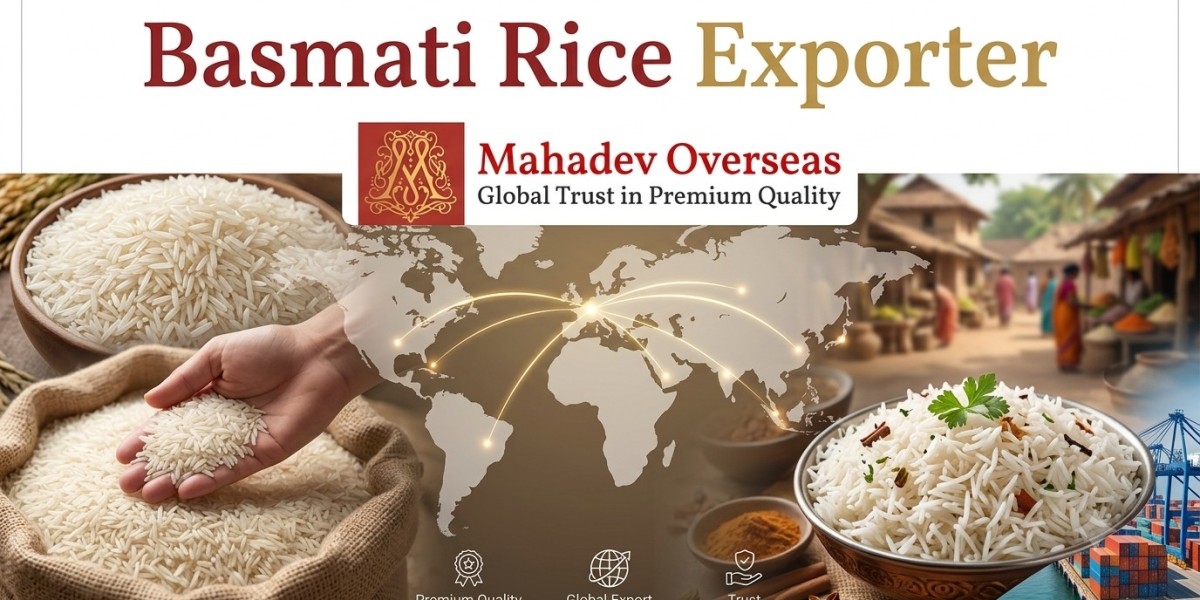


Basmati rice is valued due to its unique flavor, fine grains, mild texture, and ability to improve different foods. Whether it is used to cook the famous Indian biryanis or simply used as everyday food, the high-quality rice became popular among consumers all over the world. For importers, distributors, wholesalers, restaurants, and retailers, however, it is important not only to choose the rice variety but also the proper supplier of it.
A good basmati rice exporter can influence product quality, supply stability, buyer satisfaction, and company development. Being numerous on the international market of rice, suppliers require careful evaluation of such aspects as their quality criteria, processing methods, packaging services, exporting experience, and reliability prior to establishing business relations with them.
The company Mahadev Overseas assists businesses to purchase high-quality rice products considering the reliable supply and customer demands. Below is the practical guide on how to choose the best basmati rice exporter.
Distinguishing Factors of Basmati Rice
Basmati rice is known for certain qualities that differentiate it from most other kinds of rice. The natural aroma, long and thin grains, and nice texture make it highly sought after by the premium food market segment.
When prepared correctly, the best basmati rice will result in distinct, fluffy grains with an attractive smell. It will be perfect for meals where the appearance and texture of rice matter.
For those who wish to buy it internationally, knowing its qualities is the first step towards finding the right supplier.
1. Assessing the Quality of the Rice
Quality of the rice should be one of the first things that needs to be looked at when choosing a basmati rice exporter.
Customers should look at:
Length and appearance of the grains
Aroma
Texture after cooking
Amount of moisture in the product
Purity
Percentage of broken grains
Presence of any foreign elements
Uniformity from batch to batch
It is important for a good exporter to have detailed information on the quality of the product.
When looking for premium basmati rice, it is especially important to maintain uniform quality from batch to batch, since customers buying premium products expect the same aroma and texture every time.
2. Seek Diverse Products
Market needs vary depending on different situations. While some people may need regular products, others may prefer long-grain or specially prepared rice products.
An efficient exporter should have a variety of rice products that suit all kinds of market demands.
Depending on the suppliers, buyers will be offered:
Regular basmati rice
Long-grain basmati rice
Sella basmati rice
Steam basmati rice
Golden Sella basmati rice
Other Indian rice products
The diversification of products provides more options to the importers and distributors.
3. Processing and Quality Control
The modern process of rice processing is very important in determining the quality of the produce. After harvest, rice has to undergo proper cleaning, milling, grading, sorting, and packing processes.
An experienced basmati rice exporter should have proper means of removing impurities, maintaining grain quality, and getting consistent specifications.
Proper grading and sorting processes will enable the separation of contaminants and broken grains, whereas proper milling will prepare the rice for the market.
Questions about processing and quality control methods should be raised before making a big order.
4. Look at Different Packaging Options
Packaging is not just about presenting rice. The packaging helps keep the product safe from damage in storage, transportation, and distribution.
The kind of customer that you have might have different packaging requirements according to his market.
For instance, some customers will require consumer-friendly packages, others might prefer larger bags.
A good exporter must be able to explain different packaging options considering the following:
Quantity
Destination market
Storage requirements
Retail requirements
Branding requirements
Transport requirements
Good packaging design can help protect your product while helping with brand presentation.
5. Prove Exporting & International Marketing Experience
Food export involves awareness of various factors including logistics, documentation, packaging, and destination requirements.
An experienced basmati rice exporter would know that coordination is needed for every international shipment.
Export experience could be useful in managing such factors as:
Documentation
Shipping schedules
Package specifications
Port operations
International logistics
Communication with buyer
Dealing with experienced exporters will make buying easier especially when entering a new international market.
6. Inquire about Supply Consistency and Supply Capability
The vendor might offer outstanding sample products; however, consistency of supply is needed to develop good business relations.
When selecting the exporter, one must assess whether the vendor will be capable of meeting one’s order volumes and keeping the product specifications.
This is particularly relevant to:
Chains of supermarkets
Distributors of food products
Restaurant chains
Importers
Wholesale firms
Private label brands
7. The Importance of Premium Basmati Rice Understanding
The need for premium basmati rice will remain as there are still many consumers who value good quality products and food authenticity.
Premium quality rice is usually used for important occasions, restaurants, catering companies, hotels, or retail products which have more expensive price positioning.
For these customers, the quality of the grain, its aroma, cooking ability, and reliability are important factors which may affect their choice.
Thus, it is better not to choose suppliers based on their low prices only. Quality reliable product will be more beneficial than a low-quality one, even if the latter is more cheap.
8. Assess the Communication from the Supplier
Effective communication tends to be underrated within the context of international sourcing.
A credible export partner will provide detailed answers regarding:
Product specifications
Minimum order quantities
Packaging
Costs
Shipment schedule
Documentation
Custom needs
Such communications help prevent mistakes and facilitate proper order planning.
For international customers, responsive customer support may be particularly useful for adjusting shipment schedules or addressing destination-specific customs needs.
9. Take into Account Private-Label and Customization Needs
Certain companies would be interested in marketing their branded rice rather than the brand of the exporter.
If you are starting up your private-label rice enterprise, inquire about whether the exporter would be able to accommodate your packaging and branding needs.
Custom packaging might enable retailers and distributors to establish themselves in the market in their unique way but keep in mind that they should have good working relationships with the exporter.
10. Focus on Overall Value, Not Only Price
Price is naturally an important factor, but it shouldn't be the only determining one.
When evaluating suppliers, look at overall value:
Quality of products
Uniformity
Processing requirements
Packaging
Export experience
Supply capability
Customer services
Reliability of deliveries
Having a reliable supplier may help you avoid issues associated with poor quality, damaged packaging, late deliveries, and complaints from clients.
An optimal price-quality combination will yield better results for your business.
Why Opt for Mahadev Overseas?
Quality and reliability are important considerations in the process of supplying rice to foreign countries. This is where the company of Mahadev Overseas comes in as it emphasizes the need to supply rice that meets various business requirements.
When looking for a reliable supplier of basmati rice, then the company of Mahadev Overseas is an ideal choice.
It caters for business needs when it comes to the supply of quality oriented rice for purposes of wholesale, retail, food service, and export trade.
Tips to Consider Before Making the First Large Purchase Order
Before ordering large quantities of products, there are some things that a buyer should consider:
Obtain specifications of the product to ensure that you know what you are buying.
Examine the sample if possible to gauge how the food looks and cooks.
Negotiate packaging details prior to the order.
Ask about the shipping and documentation details.
Consider quantities and delivery schedules of the order.
Talk about quality expectations upfront with the supplier.
Consider your communications and customer support options.
Building a Long-Term Relationship
The ideal exporter will transcend the scope of a single transaction. It is always beneficial for an importer and distributor when his supplier is familiar with the market conditions, has consistent quality, clear communication and supports their evolving needs.
In the future, the demands for your rice might change. You could have to purchase more, purchase different varieties, require specialized packaging or even enter new markets. With such flexibility from the exporter it would become much easier.
And that is why choosing a supplier must be seen as a long-term business decision.
Concluding Remarks
Selecting the proper basmati rice exporter involves a number of issues that need to be considered including quality, processing, packaging, experience, supply, and customer service. For those who deal with premium markets, selection of high-quality premium basmati rice makes a great difference.
Do not select a supplier on the basis of prices alone, but instead look at what value you receive from him and his ability to assist you in your business.
As a company which specializes in quality rice and has requirements for international supply, Mahadev Overseas may turn out to be a reliable partner for you in developing the basmati rice supply chain.









