

Handwritten price tags have been part of retail for generations. They are inexpensive, immediate and require almost no equipment. For a small stall with a handful of products, they may still be perfectly practical.
Problems begin when a store grows.
More products mean more tags. Prices change. Promotions come and go. Different employees have different handwriting. Cards become worn or damaged. Eventually, what began as a simple system can become surprisingly difficult to manage.
A dedicated price tag printer provides an alternative for retailers that want to create consistent product cards internally without abandoning the flexibility of producing labels whenever they are needed.
What Is Wrong With Handwritten Price Tags?
There is nothing inherently wrong with handwriting.
In some artisanal environments, handwritten signage can even form part of the intended aesthetic.
The issue is consistency at scale.
When dozens or hundreds of products are involved, handwritten cards can create several challenges:
Different handwriting styles
Uneven card sizes
Inconsistent product descriptions
Difficult-to-read pricing
Repeated manual work
Limited branding opportunities
Time-consuming replacements
A store may eventually spend more time managing its improvised system than expected.
Printed Tags Create a Repeatable Process
With a digital template, employees do not need to create each new card from scratch.
Instead, the business can establish a standard layout containing its preferred font, logo placement and information structure.
When a new product arrives, employees simply replace the relevant information.
For example:
Product
Triple Chocolate Brownie
Price
$6.50 each
Additional Information
Contains nuts
The next card can follow exactly the same layout while displaying completely different product information.
This creates a repeatable process rather than a collection of individual signs.
Better Consistency Across the Store
Imagine walking through a bakery where one tag uses black marker, another is printed on white paper and a third is laminated in a different size.
Nothing may be technically incorrect, but the overall display can feel disconnected.
Consistent labels support a more organised customer-facing environment.
They can be particularly useful for:
Bakeries
Butchers
Cheese counters
Delicatessens
Seafood retailers
Supermarkets
Specialty stores
Bottle shops
Edikio specifically provides plastic-card price tag solutions across many of these retail and food settings.
Food Labels Often Need More Space Than a Price
Food retailers frequently have more information to communicate than general merchandise stores.
A Food Labels Printer can allow businesses to develop reusable templates containing fields appropriate to their products.
Depending on the application, cards may include:
Product name
Selling price
Unit pricing
Ingredients
Allergens
Origin information
Product variety
Promotional messages
Clear information can help customers make faster purchasing decisions while reducing the need to repeatedly ask employees basic questions about products.
Reprinting Makes Changes Easier
Consider a butcher shop that receives an updated price for one product.
With a handwritten system, an employee needs to find another blank card and recreate the tag while attempting to match the others.
With a digital system, the existing label can be opened, the price changed and a new card printed.
The same principle applies when:
A promotion finishes
A product sells out
A new line arrives
A seasonal item is introduced
Product information changes
An old card becomes damaged
Digital templates turn each update into an editing task rather than a redesign task.
Plastic Cards Provide Another Display Option
Many stores rely on printed paper because it is familiar.
However, printable plastic cards can be useful where businesses want a more purpose-designed product display.
Edikio's food-focused solutions use plastic cards and are intended for environments where labels may be exposed to refrigeration, moisture and regular handling.
Cards can also be paired with different holder styles depending on how products are displayed.
Is It Worth Changing for a Small Business?
Not every business needs to move away from handwritten labels immediately.
The decision becomes more compelling when the existing method begins creating unnecessary work.
Ask yourself:
How many labels do we maintain?
How often do prices change?
Do staff regularly rewrite cards?
Are our displays visually inconsistent?
Do we frequently add seasonal products?
Does handwriting make some information difficult to read?
Would reusable templates save employee time?
Several "yes" answers may indicate that a dedicated solution deserves consideration.
Look Beyond the Printer
Moving to professional label printing involves more than purchasing hardware.
A good workflow also requires appropriate:
Software
For creating and modifying templates.
Cards
For the intended display environment.
Printer Ribbons
For producing the required design.
Card Holders
For positioning labels neatly around products.
An integrated solution can make setup easier than combining equipment and supplies from unrelated sources.
Why Choose Edikio Australia?
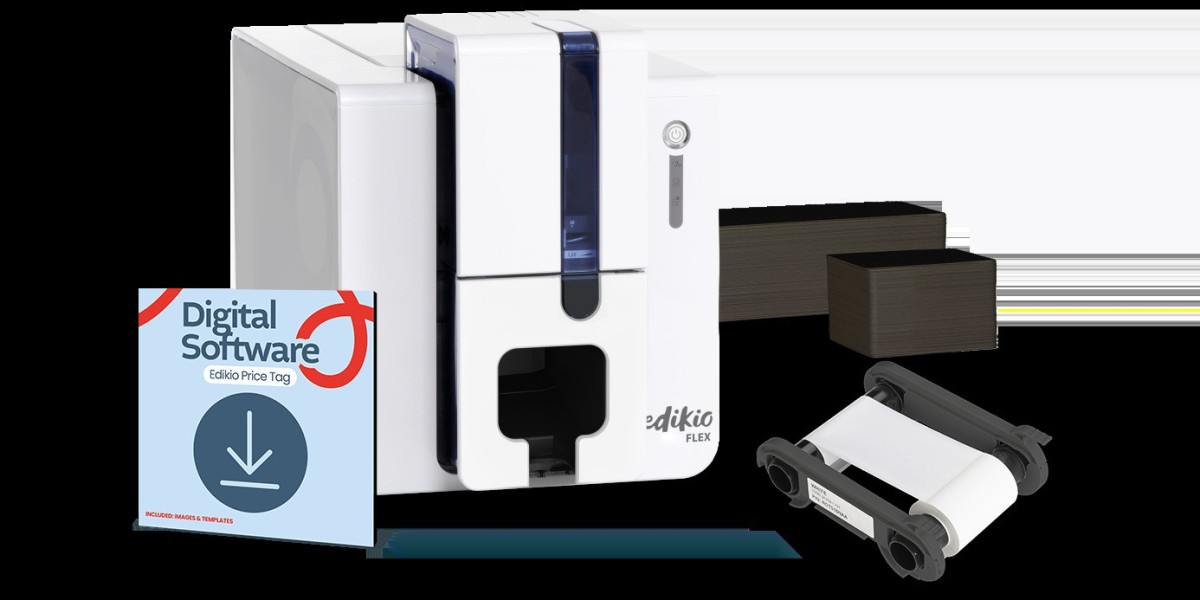
Edikio Australia focuses specifically on in-house plastic price-tag and food-display printing. Its solutions cater to retailers and hospitality operators including supermarkets, bakeries, butcher counters, delicatessens, hotels and restaurants. Available packages can combine the printer, design software, ribbons and cards needed to build a consistent labelling process, while Edikio also offers related label holders and sample-card options.
A More Professional Alternative to Manual Labels
Businesses ready to move beyond handwritten or repeatedly laminated paper tags can consider a printer for plastic cards as part of a more structured labelling system.
The objective is not simply to make tags look better. It is to make producing, updating and replacing them easier for the people managing the store every day.
Final Thoughts
Handwritten signs can work well when the product range is small and rarely changes. As a business grows, however, consistency and efficiency become increasingly important.
A dedicated printing system gives retailers a way to maintain the flexibility of creating labels in-house while producing a more uniform result.
For stores regularly changing prices, launching promotions or introducing products, moving from manual price cards to reusable digital templates can be a practical next step.