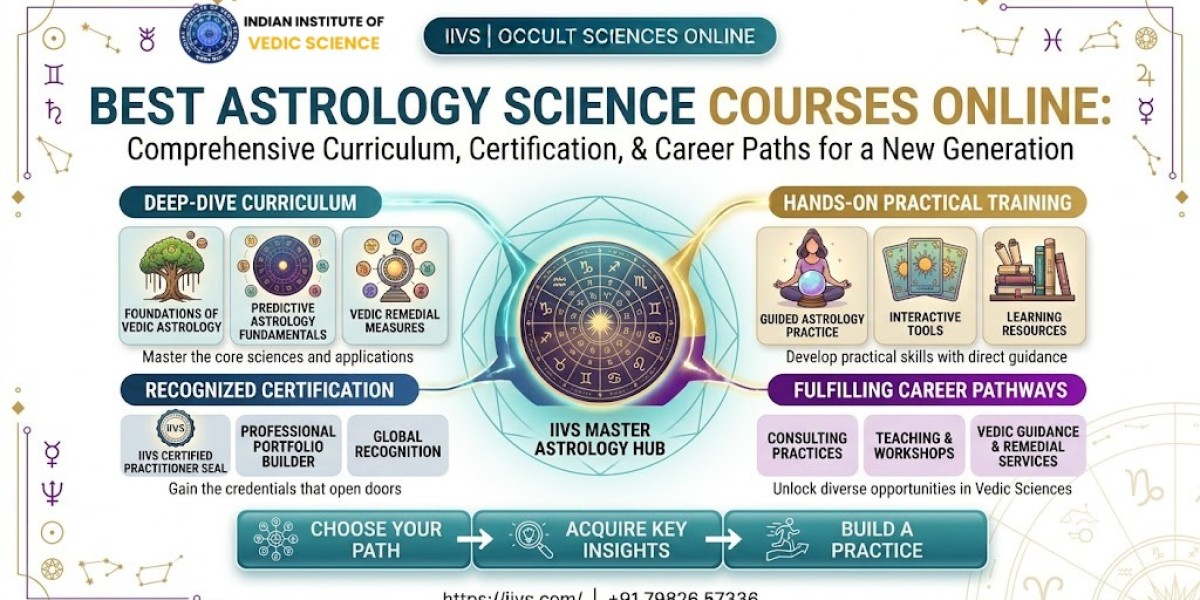


Astrology Science Courses for Beginners: What to Learn, Eligibility, Certification & Career Scope
Astrology continues to attract learners who want to understand traditional systems of planetary interpretation, birth charts, zodiac signs, and Jyotish principles. With online education becoming more accessible, beginners can now study astrology from home through structured lessons, live classes, practical exercises, and guided instruction.
However, starting can feel confusing. There are many programs available, ranging from short introductory classes to comprehensive certification and diploma programs. Choosing the right course requires understanding what you will learn, who can enroll, how practical training works, and what career possibilities may follow.
This guide explains everything beginners should know before choosing astrology science courses.
Quick Answer: What Should Beginners Learn in Astrology?
Beginners should start with fundamental concepts before moving to advanced predictive techniques. A structured program generally introduces:
Zodiac signs
Planets
Houses
Ascendant
Birth-chart fundamentals
Planetary relationships
Traditional interpretation methods
Chart analysis
Practical case studies
Students should choose a course that combines theory with practical exercises and instructor guidance. Certification can document course completion, but developing real competence requires continued practice and learning.
What Are Astrology Science Courses?
Astrology science courses are educational programs that teach astrology as a traditional system of knowledge and interpretation. Depending on the program, students may study general astrology or specialize in Indian traditions such as Vedic Astrology.
The term "science" in this context should not be confused with modern empirical science. Astrology is generally understood as a traditional or cultural system rather than an empirically established scientific method.
A structured course can nevertheless provide a systematic way to study its concepts, terminology, calculations, charts, and traditional interpretive approaches.
What Do Beginners Learn in an Astrology Course?
A beginner-friendly curriculum should progress from simple concepts toward practical interpretation.
1. Zodiac Signs
Students begin by understanding the twelve zodiac signs and their traditional characteristics.
You may learn about:
Sign classifications
Elements
Modalities
Planetary associations
Traditional characteristics
This creates the foundation for understanding planetary placements within a birth chart.
2. Planets
Students learn the traditional significance of planets used in astrology.
The curriculum may cover their characteristics, associations, strengths, relationships, and placement within different houses and signs.
Understanding planets individually is important, but students eventually need to learn how multiple factors interact within a chart.
3. Houses
The twelve houses form another major part of astrological study.
Students learn the traditional areas of life associated with each house and how planetary placements are interpreted in relation to them.
4. Birth Charts
A birth chart provides the framework for studying planetary positions at a particular time and location.
Students may learn how to identify the ascendant, planets, houses, and other major components before progressing toward interpretation.
Learning to understand a vedic astrology chart can become an important practical skill for students choosing the Vedic path.
Why Is Vedic Astrology Popular Among Beginners?
Vedic Astrology, or Jyotish, is an important Indian astrological tradition. Students interested in Indian approaches can pursue a dedicated vedic astrology course to study its concepts in greater depth.
A structured program may introduce:
Planets and signs
Houses
Ascendant
Birth-chart analysis
Traditional Jyotish concepts
Planetary relationships
Timing methods
Divisional concepts
Practical interpretation
Beginners should avoid trying to memorize every advanced technique immediately. Understanding the fundamentals first creates a stronger foundation for advanced learning.
Online Astrology Learning for Beginners
Online education can make astrology more accessible to students who cannot attend regular classroom sessions.
Online astrology courses in India may include live instructor-led classes, recorded lessons, digital resources, assignments, and practical sessions.
Advantages of Online Learning
Online learning can provide:
Flexible schedules
Home-based learning
Live instructor interaction
Access to recorded lessons
Digital study materials
Regular practice
Remote access to specialized instructors
However, not every online course offers the same experience. Before enrolling, check whether classes are live, whether recordings are available, and how students receive practical guidance.
What Is the Eligibility for an Astrology Course?
Eligibility depends on the institute and level of the program.
Many introductory courses are designed for beginners and may not require previous astrology knowledge. Advanced programs may expect students to understand foundational concepts first.
Before enrollment, check:
Educational requirements
Age criteria, if applicable
Previous subject knowledge
Language of instruction
Technical requirements for online learning
Whether beginners are accepted
Any prerequisite courses
If you have never studied astrology before, a foundation-level program is usually a better starting point than an advanced specialization.
How Long Does It Take to Learn Astrology?
There is no fixed duration for learning astrology because different programs have different objectives.
A short introductory course may focus on basic concepts, while a comprehensive program may cover advanced topics and practical interpretation over several months.
Instead of choosing a course simply because it is long or short, examine what the duration actually includes.
Ask:
How many classes are conducted?
How much practical training is provided?
Are assignments included?
Are there live doubt-solving sessions?
Are classes recorded?
Is there an assessment?
The objective should be meaningful learning rather than completing a course as quickly as possible.
Why Practical Training Is Important
Astrology involves applying multiple concepts together. Reading about planets, signs, and houses is different from actually interpreting a chart.
Practical training can include:
Sample birth-chart analysis
Guided chart interpretation
Case studies
Assignments
Instructor demonstrations
Question-and-answer sessions
Practice exercises
Feedback
For beginners, this practical component can help bridge the gap between theoretical knowledge and application.
Regular practice also makes it easier to identify areas where additional study is needed.
Certification: What Should You Know?
Many learners prefer certification because it provides documentation that they completed a particular course.
An astrology certification course may include a certificate after students fulfill the institute's requirements, such as attendance, assignments, assessments, or course completion.
However, an institute-issued certificate should not automatically be considered equivalent to a university degree, government license, or regulated professional qualification.
Before enrolling, check:
Who issues the certificate?
What are the completion requirements?
Is an assessment included?
Is practical training part of the program?
What subjects are covered?
What does the certificate actually represent?
The quality and depth of the education should remain the primary consideration.
How to Choose the Right Astrology Institute?
Choosing an institute is one of the most important decisions for beginners.
If you are researching the best astrology institute in India, compare institutes based on educational factors rather than relying only on marketing claims.
Look at:
Curriculum
The syllabus should clearly explain what students will learn and in what sequence.
Faculty
Consider the instructor's knowledge, teaching experience, and ability to explain complex concepts clearly.
Practical Training
Look for chart analysis, assignments, demonstrations, and case-based learning.
Learning Support
Beginners often need help with terminology and interpretation. Doubt-solving and instructor interaction can make a significant difference.
Course Format
Check whether the program offers live classes, recordings, or both.
Certification
Understand the certificate and the requirements for receiving it.
Students specifically interested in Vedic Astrology can also compare options when searching for the best vedic astrology institute in India.
Career Scope After Learning Astrology
Astrology can be studied for personal interest, spiritual exploration, education, or potential professional development.
After developing sufficient knowledge and practical experience, learners may explore:
Astrology consultation
Independent practice
Astrology education
Workshops
Online content creation
Educational writing
Specialized consultation
However, completing a course alone does not guarantee a successful career or income. Professional development requires continued study, practical experience, communication skills, responsible client interaction, and ethical conduct.
Can Astrology Be Combined With Other Vedic Sciences?
Yes. Some learners eventually explore related disciplines to broaden their knowledge.
For example, a student may begin with astrology and later study numerology, Vastu, palmistry, or other traditional systems.
An occult science course may provide an introductory overview of multiple disciplines, allowing students to discover which areas interest them most.
However, beginners should avoid trying to master too many subjects simultaneously. Developing depth in one discipline first can make future learning more organized.
Why Choose IIVS for Astrology Learning?
The Indian Institute of Vedic Science (IIVS) offers structured programs in Vedic Astrology and several related Vedic and esoteric disciplines.
Its course portfolio includes Vedic Astrology, Lal Kitab Astrology, KP Astrology, Vastu Shastra, Numerology, Lo Shu Grid Numerology, Palmistry, Tarot, Reiki, Sound Healing, Crystal Healing, Akashic Records, Hypnosis, and Past Life Regression.
This range allows learners to select a learning path based on their interests and goals.
Starting astrology as a beginner is easier when you follow a structured learning path. Begin with fundamental concepts such as signs, planets, houses, ascendant, and birth charts before progressing to advanced interpretation techniques.
When comparing astrology programs, consider the curriculum, eligibility, duration, practical training, teaching format, faculty, certification, and student support.
A certificate can document course completion, but genuine skill comes from understanding the concepts and applying them through regular practice.
If you want to explore astrology as a serious learning path, IIVS can help you understand suitable course options through free counselling.
Website: https://iivs.com/
Phone: +91 79826 57336
Frequently Asked Questions
1. Can beginners study astrology?
Yes. Beginners can start with a foundation-level program that introduces basic astrological concepts before progressing to advanced topics.
2. What should I learn first in astrology?
Start with zodiac signs, planets, houses, ascendant, and birth-chart fundamentals. Once these concepts are clear, you can move toward interpretation techniques.
3. Can I learn astrology online?
Yes. Online programs can provide live classes, recorded lessons, digital study material, assignments, and practical training.
4. Is Vedic Astrology suitable for beginners?
Yes. Beginners can study Vedic Astrology through a structured program that starts with foundational Jyotish concepts.
5. What is the eligibility for an astrology course?
Eligibility varies by institute and course level. Many introductory programs accept beginners without previous astrology knowledge.
6. How long does an astrology course take?
Duration depends on the curriculum and depth of study. Short programs may cover fundamentals, while comprehensive programs require more time for advanced topics and practical training.
7. Is practical training necessary in astrology?
Yes. Practical chart analysis, case studies, assignments, and guided exercises help students apply theoretical concepts.
8. Does an astrology course provide certification?
Many institutes provide a certificate after students complete their course requirements. Students should verify the certificate's scope and completion criteria before enrollment.
9. Can astrology become a career?
Some learners pursue consultation, teaching, workshops, content creation, or independent practice after developing sufficient knowledge and experience. Career outcomes vary by individual skills and continued learning.
10. How do I choose the best astrology course?
Compare the syllabus, faculty, practical training, learning format, duration, certification, student support, and learning outcomes. Choose a program that matches your current knowledge and long-term goals.









